The following is a reflection on Hebrews 5:5-10, the Epistle Lesson for the Fifth Sunday in Lent, according to the Revised Standard Lectionary. Hebrews 5:1-10 is the Epistle Lesson for Proper 24B.

St. Mary the Virgin

The High Altar at the Episcopal Church of St. Mary the Virgin, Times Square, NYC. Photo by Rick Morley.

Abram had been told by God to pick up from his land—the only home he had ever known—and go to a new place.You can’t possibly imagine how big this is unless you’ve ever been among people who are rooted to their land through many generations. This was a big ask. In return, God said he would bless him and make him the father of many nations.

After settling by the Oaks at Mamre he was still childless. So much for “father of nations.” He was in some significant struggles with his nephew, Lot. And, subsequently he found himself in the middle of a grand war.

A war among many kings.

If Abraham’s story stopped there, he would be a laughingstock. A sad laughingstock whose life had been completely turned upside-down by a God who had asked him to move, and who had promised him the world in return. And all he had to show for it was war, strife, and barrenness.

He won the war. And as the kings were settling the tab in comes a new figure. With a name that hadn’t been referenced before, and in the narrative of the Torah wouldn’t be referenced again. A figure that appears and then vanishes again with hardly a comment.

Continue Reading…

The following is a reflection on John 3:14-21, the Gospel lesson for the Fourth Sunday in Lent, Year B, according to the Revised Common Lectionary.

lifted high

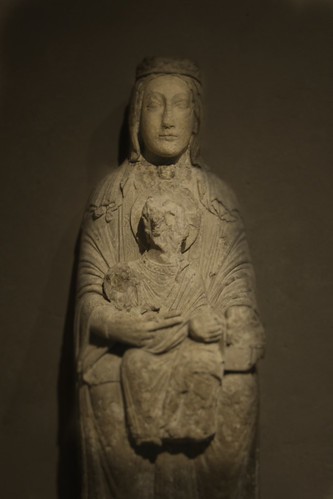
The Romanesque crucifix hanging in the Fuentiduena Chapel in The Cloisters, NYC. Photo by Rick Morley.

The scene of the brazen serpent (in Numbers 21:4-9) immediately makes me recall the serpent in the Garden of Eden. That the Israelites were punished for their thanklessness with deadly biting serpents, and then forced to look upon the image of another serpent to find a cure, makes me think that God was trying to get the Israelites to remember what had transpired in Eden. However, scholarship and archaeology tells us that serpent images were used in ancient Israel, during the time of the unified monarchy, as a symbol of fertility, and that similar images were used in ancient Egypt as a talisman to repel living snakes. (See: Joines, Karen Randolph. “Bronze Serpent In The Israelite Cult.” Journal Of Biblical Literature 87.3 (1968): 245-256.)

That the Israelites had recently evacuated Egypt, what we may have here is a recollection of Egyptian practice. They were going to ward off the snakes in the same way as their captor Egyptians had done.

If one were going to preach on the brazen serpent, I think this would be a decent place to start—or at least have in the back of one’s mind.

However, when this scene is referenced in the third chapter of the Gospel of John, I don’t think this that this is what Jesus had in mind at all. It has nothing to do with fertility, Egyptian practice, or even the history of the Exodus. It seems that the brazen serpent is used here to speak about Jesus’ crucifixion in two ways: Continue Reading…

The following is a reflection on John 2:13-22. the Gospel lesson for the Third Sunday in Lent, Year B, according to the Revised Common Lectionary.

The Cloisters

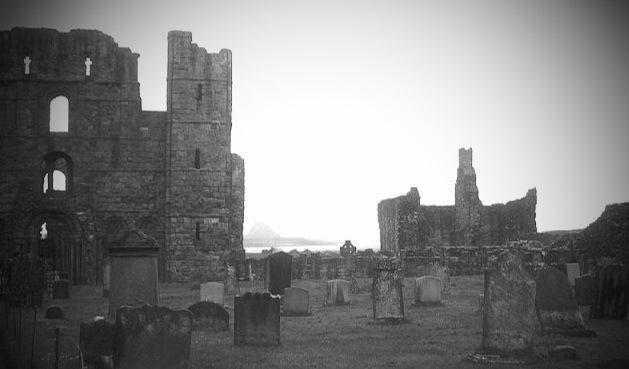
St. Guilhem Cloister, at The Cloisers, NYC. Photo by Rick Morley.

But he was speaking of the temple of his body.

In my imagination, it went something like this: It was a stunningly beautiful morning. You know that kind of morning?  When the sun just seems to shine brighter, and the sky is so brilliant blue that it makes you stop and stare? When the breeze is slight and cool and the sun is warm on your skin? When the mountains, and the sea, and the trees, and homes, and flowers just all seem to sing?

When everything just fits together, and you’ve slowed down just enough to catch it?

I imagine it was one of those mornings when King Solomon walked out of his cedar palace, and onto a sweeping veranda and looked out upon his kingdom shining in the brilliant sun. The birds were singing, the scent of jasmine hung in the air, and somehow the cares of governing seemed a little lighter.

And standing there in his palace, a realization dawned on him. And it stung.

He had a grand house. And God was in a tent. Continue Reading…

On the cross you don’t just lose your life, but you do so in a wholly unfashionable way.

Continue Reading...

I think Mark, and Jesus, also believed that the spiritual life and ministry itself should be shrouded in urgency. When life and death, light and darkness, hope and despair, love and hate are at stake, there is no time for laziness. There isn’t time for ho…hum…what to do now?

No time for commissions to endlessly propose another commission to begin a study, and report back in four years, so that another commission can consider the study and propose another one.

No.

Continue Reading...